

How to Identify Real Silver Jewellery (6 Easy Tests)
Identifying real silver jewellery is essential, especially with the growing presence of imitation and plated jewellery in the market. 925 sterling silver jewellery is widely used because of its durability and purity (92.5% silver content), but verifying authenticity requires a few practical checks.
This guide explains how to identify real silver jewellery using simple tests, hallmark verification, and craftsmanship evaluation.

How to Identify Real 925 Silver Jewellery (Quick Answer)
Real 925 silver jewellery can be identified by checking for a 925 hallmark, confirming that the metal is non-magnetic, observing its weight and density, and noticing natural tarnishing over time. Sterling silver contains 92.5% pure silver, making it the global standard for jewellery.
Key Takeaways
- 925 silver contains 92.5% pure silver and 7.5% alloy metals
- Real silver is not magnetic
- Genuine silver may tarnish naturally over time
- The 925 stamp is the most common authenticity indicator
- Buying from trusted brands ensures purity
Table of Contents
- What is Pure Silver and 925 Silver
- Key Difference Between Pure Silver and 925 Silver
- How to Identify Pure or 925 Silver Jewellery
- Summary: Tests to Identify Real Silver Jewellery
- Hallmarks and Silver Standards
- Technical Specifications of Silver
- About Shyle Silver Jewellery
- Frequently Asked Questions
What is Pure Silver and 925 Silver?
Pure silver (999) contains 99.9% silver but is too soft for jewellery, while 925 sterling silver is the global standard used in jewellery due to its strength and durability.
925 silver, also known as sterling silver, contains 92.5% silver and 7.5% alloy metals such as copper. This makes it stronger, more durable, and ideal for jewellery.
To understand silver purity and craftsmanship in detail, read our guide on 925 silver jewellery handmade in Jaipur.

Key Difference Between Pure Silver and 925 Silver
| Feature | Pure Silver (999) | 925 Silver (Sterling) |
|---|---|---|
| Silver Content | 99.9% | 92.5% |
| Strength | Very soft | Durable |
| Use | Coins, utensils | Jewellery |
| Durability | Low | High |
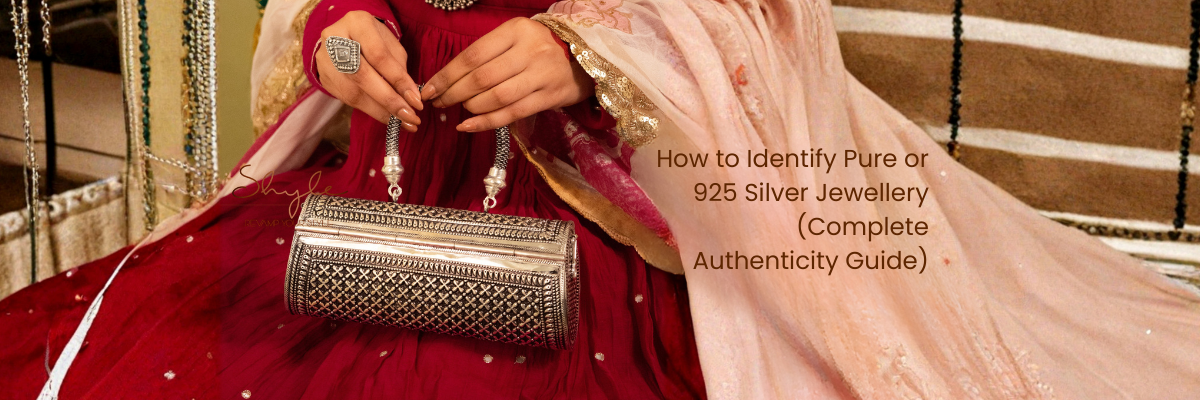
How to Identify Pure or 925 Silver Jewellery
Identifying real silver jewellery requires combining multiple tests rather than relying on a single method.
Check the Silver Stamp
Look for markings such as 925, S925, or 999 stamped on the jewellery. These stamps indicate the purity level of silver used and are usually found inside rings, on clasps, or behind pendants.
Magnet Test (Basic Screening Only)
Silver is not magnetic, and neither is copper used in sterling silver alloys. If jewellery strongly attracts a magnet, it likely contains iron or steel. This test should only be used to rule out fake metals, not to confirm purity.
Weight and Density Check
Silver is a dense metal. Real silver jewellery feels heavier compared to imitation jewellery made from lightweight metals.
Tarnish Observation
Silver reacts with sulphur in the air and forms silver sulfide, which causes slight darkening over time. This natural tarnish is a sign of genuine silver.

Craftsmanship Inspection
Authentic silver jewellery typically has clean finishing, detailed engraving, and precise stone setting.
Professional Silver Testing (Recommended for Absolute Verification)
If you want to be completely certain about silver purity, you can get the jewellery tested at local jewellery testing centres, which are commonly available in most jewellery markets.
These centres typically use XRF (X-ray fluorescence) or laser-based testing methods to analyse the metal composition from the surface. The test is non-destructive and provides results within seconds.
Such tests are usually 95–97% accurate and cost a small fee, often under ₹100 per piece. This makes them one of the most reliable and accessible ways to verify whether a jewellery item is made of genuine 925 silver.
Buy from Trusted Sources
The most reliable way to ensure authenticity is purchasing from trusted silver jewellery brands that clearly specify 925 sterling silver purity and craftsmanship origin.
For example, Shyle, a Jaipur-based jewellery brand, specializes in handcrafted 925 sterling silver jewellery made by traditional artisans.
Explore their collection of handcrafted 925 silver jewellery.
Summary: Tests to Identify Real Silver Jewellery
| Test | Result for Real Silver |
|---|---|
| Magnet Test | No strong attraction |
| Weight Test | Heavy and dense |
| Tarnish | May darken slightly |
| Stamp Check | 925 / 999 marking |
To understand silver purity and origin, read our guide on 925 silver jewellery handmade in Jaipur.
Hallmarks and Silver Standards
Silver jewellery typically includes markings such as 925 (sterling silver), 999 (pure silver), and S925. These markings are the most common indicators used globally to identify sterling silver jewellery.
Technical Specifications of Silver
| Specification | Value |
|---|---|
| Pure Silver | 99.9% |
| Sterling Silver | 92.5% |
| Common Alloy | Copper |
| Metal Type | Precious Metal |
Sterling silver jewellery contains 92.5% silver, which is the internationally accepted purity standard.
About Shyle Silver Jewellery
Shyle is a Jaipur-based jewellery brand specializing in handcrafted 925 sterling silver jewellery. The brand works with skilled artisans (karigars) to create modern designs while preserving traditional Indian jewellery craftsmanship.
Shyle gained national recognition after appearing on Shark Tank India Season 4, where entrepreneurs Namita Thapar and Ritesh Agarwal invested in the brand.
Shyle focuses on bringing authentic Jaipur-made silver jewellery to customers across India and globally.
Frequently Asked Questions
What is the easiest way to identify real silver jewellery?
The easiest way is to check for a 925 stamp, ensure the jewellery is non-magnetic, and observe its weight and natural tarnishing.
How can I tell if silver jewellery is real?
Real silver jewellery can be identified by checking for a 925 or 999 stamp, evaluating weight and craftsmanship, and using basic tests such as magnet screening.
Is 925 silver real silver?
Yes, 925 silver contains 92.5% pure silver and is the global standard for jewellery.
Does silver tarnish?
Yes. Both pure silver and sterling silver can tarnish due to a reaction with sulfur compounds, forming silver sulfide.
Which is better: pure silver or 925 silver?
925 silver is better for jewellery because it is more durable and suitable for daily wear.
Sources and References
Sterling silver is defined as containing 92.5% silver according to international standards.
Source: https://www.britannica.com/art/sterling-silver
Jaipur is a major jewellery manufacturing hub known for craftsmanship and silver production.
Source: https://www.ibef.org/exports/gems-and-jewellery-industry-india